

Three Strict Rules that Define the Holy Trinity
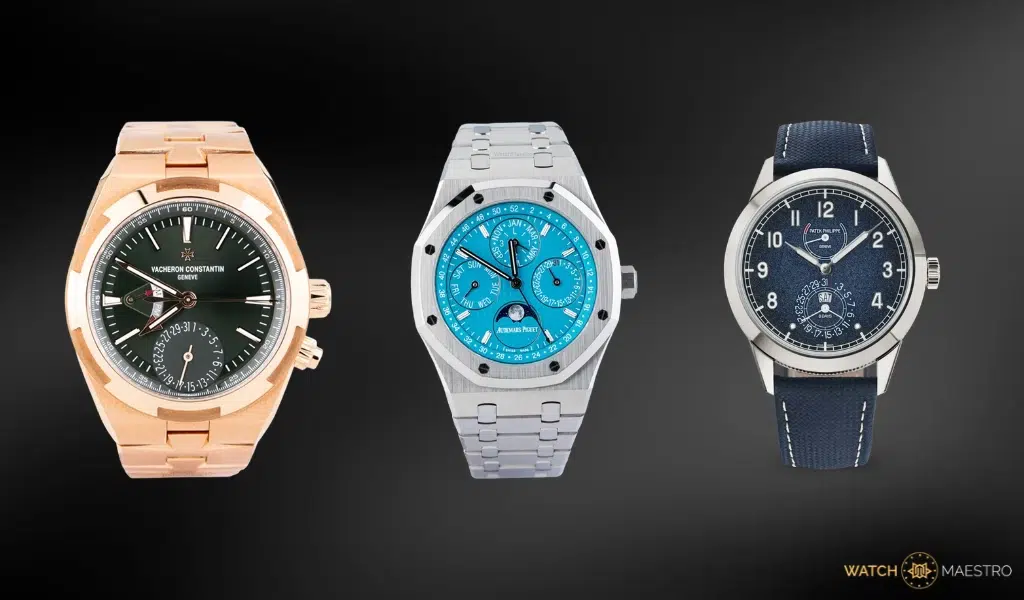
The term “Holy Trinity,” also called the “Big Three,” emerged in the 1970s. During the Quartz Crisis, cheap, battery-powered Japanese watches pushed hundreds of historic Swiss workshops out of business. Patek Philippe, Audemars Piguet, and Vacheron Constantin survived without lowering their manufacturing standards. Membership in this group requires meeting three strict standards:
- Unbroken Operational History: Many heritage brands active today closed for decades before luxury conglomerates revived their names. The Big Three never shut down. Vacheron Constantin has produced watches continuously since 1755, making it the oldest manufacturer in continuous operation. Patek Philippe has operated without pause since 1839, and Audemars Piguet has worked continuously in Le Brassus since 1875.
- Hand-Finished Calibers: Machines can cut raw parts, but watchmakers at these three houses decorate every component by hand. They polish screw heads, carve internal angles along bridge bevels, apply circular graining to baseplates, and smooth gear teeth. Vacheron Constantin frequently submits its movements for independent Geneva Seal certification. Patek Philippe enforces its proprietary Patek Philippe Seal, while Audemars Piguet applies matching decorative handcraft across its complications.
- Mastery of Grand Complications: Entry into the top tier requires constant technical innovation. All three houses consistently design and build the most difficult complications in horology: perpetual calendars that track leap years until 2100, minute repeaters that chime the time on internal gongs, and split-seconds chronographs that time simultaneous events.
| Brand | Year Founded | Ownership Structure | Estimated Annual Output | Primary Design Focus |
|---|---|---|---|---|
| Vacheron Constantin | 1755 | Richemont Group | approx. 25,000 to 30,000 units | Classical design & Geneva Seal finishing |
| Audemars Piguet | 1875 | Independent (Founding Families) | approx. 50,000 units | Bold geometry & modern material engineering |
| Patek Philippe | 1839 | Independent (Stern Family) | approx. 65,000 to 70,000 units | Grand complications & generational prestige |
Why Rolex is Outside the Holy Trinity
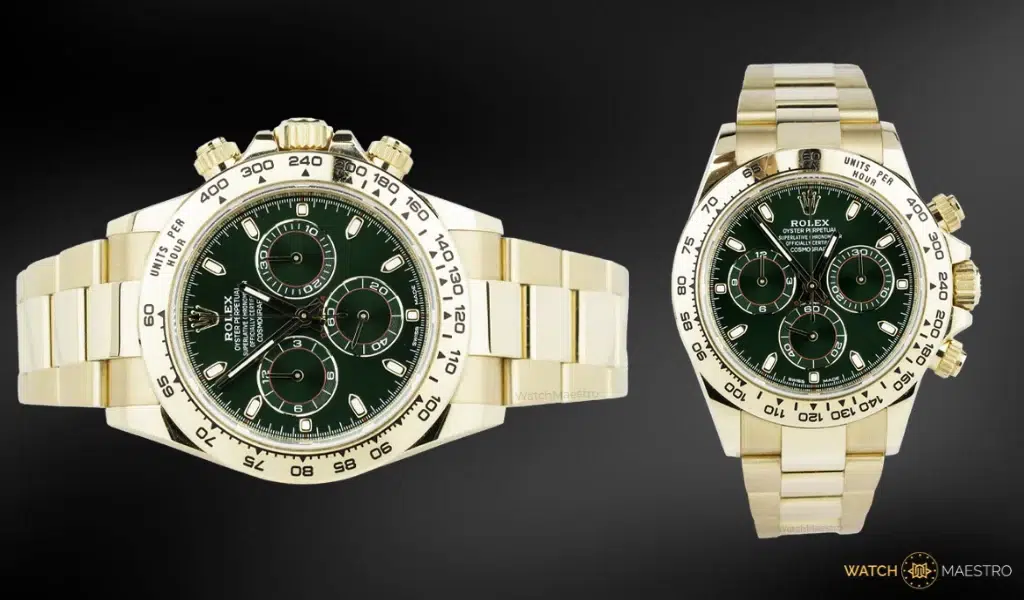
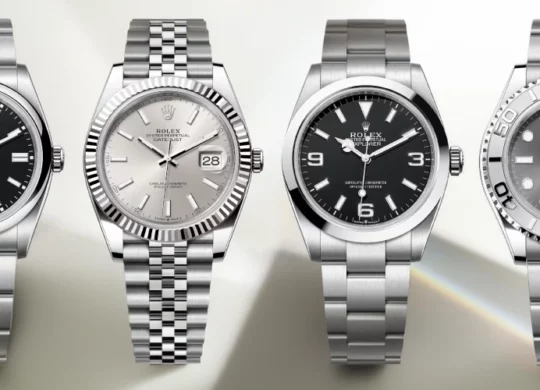
New collectors often wonder why Rolex does not belong to the Big Three. Rolex sells more watches than Patek, AP, and Vacheron combined. It has unmatched global name recognition and outstanding secondary-market liquidity. Yet Rolex is outside the Trinity because of its manufacturing philosophy:
- Industrial Scale vs. Artisanal Production: Rolex operates as a high-volume industrial manufacturer, building roughly 1.2 million watches each year. The Holy Trinity houses produce small annual quantities where watchmakers manually assemble, test, and finish movements.
- Workhorse Movements vs. Decorative Architecture: Rolex builds durable, machine-assembled movements designed for daily wear. It conceals these movements behind solid steel or gold casebacks. The Big Three build calibers with open sapphire casebacks so owners can inspect hand-beveled bridges, blued screws, and polished levers.
- Complication Ceilings: Rolex focuses on daily utility: time-only models, dates, dual-time GMTs, and basic chronographs. It does not produce minute repeaters, tourbillons, or perpetual calendars. Rolex leads the luxury tool watch market, while the Holy Trinity leads high horology.
Secondary Market Reality: We Analyzed around 200 Transactions at WatchMaestro
To understand how secondary capital flows into these brands, we analyzed 200 secondary market watch sales at WatchMaestro totaling $12,622,334 (AED 46,355,520).
The data reveals a stark divide between retail perception and secondary market liquidity. While the Holy Trinity accounted for 31.5% of total units sold (63 watches), they absorbed 46.2% of all capital spent ($5,826,279 / AED 21,397,000). In comparison, Rolex generated 29.4% of our total sales revenue across 116 units.
| Brand | Units Sold | Mean Price (USD / AED) | Median Price | Price Range |
|---|---|---|---|---|
| Patek Philippe | 30 | $117,188 (AED 430,370) | $111,627 | $13,587 to $304,969 |
| Audemars Piguet | 23 | $82,139 (AED 301,650) | $64,806 | $31,450 to $284,806 |
| Vacheron Constantin | 10 | $42,145 (AED 154,780) | $32,033 | $22,873 to $117,086 |
| Rolex | 116 | $31,986 (AED 117,470) | $19,548 | $7,134 to $254,826 |
| F.P. Journe | 5 | $351,235 (AED 1,289,910) | $141,048 | $107,828 to $1,198,067 |
| Richard Mille | 4 | $288,553 (AED 1,059,710) | $237,338 | $229,843 to $449,694 |
Note: At WatchMaestro, we sold 200 watches between May 14, 2026 and October 30, 2026
Three clear market patterns emerge from these transactions:
- Vacheron Constantin Offers Secondary Arbitrage: Despite holding the longest uninterrupted history in Swiss horology, Vacheron trades at a median price of $32,033 (AED 117,600). That is half the median price of Audemars Piguet ($64,806 / AED 238,000) and less than a third of Patek Philippe ($111,627 / AED 410,000).
- Patek Philippe Covers the Widest Spread: Patek posted the highest standard deviation inside the Trinity ($74,267). It achieves massive transaction values through perpetual calendars and grand complications, yet its entry floor dips down to $13,587 (AED 49,900) for yellow-gold dress watches.
- Hard-Asset Liquidity: Buyers settled 87.3% of these Trinity transactions in cash (55 sales) and 9.5% via direct bank wires (6 sales). Large buyers treat these three brands as liquid, portable stores of wealth.
The Flagship Sports Watch Showdown
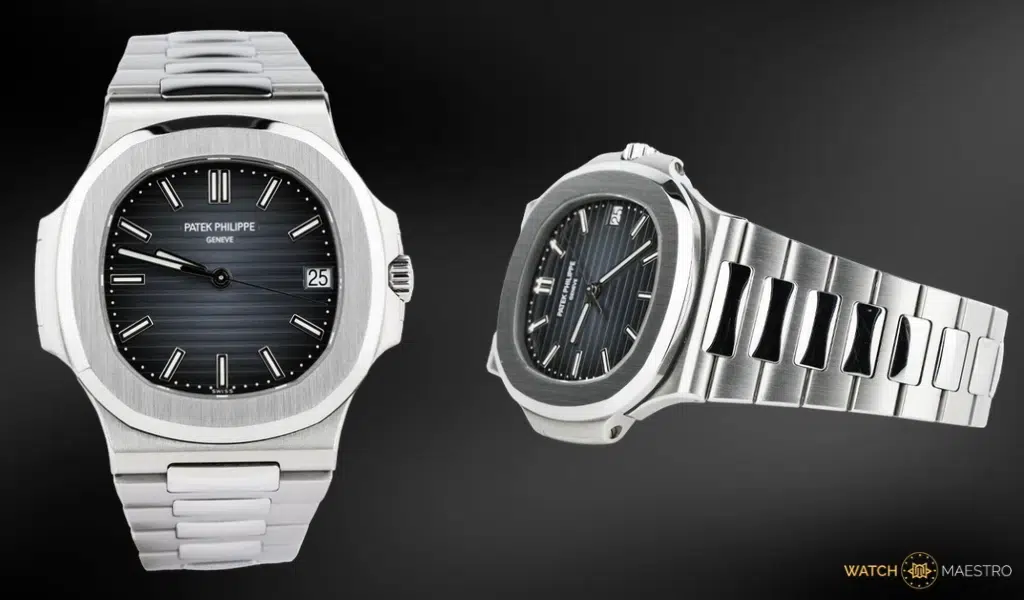
Secondary market interest focuses heavily on integrated-bracelet luxury sports models. While all three houses built iconic sports models, the market prices them differently.
| Flagship Steel Model | Secondary Market Price (USD) | Secondary Market Price (AED) | Market Multiple |
|---|---|---|---|
| Patek Philippe Nautilus (5711/1A) | $141,321 | AED 519,000 | 5.5x Baseline |
| Audemars Piguet Royal Oak (15500/15510) | $56,000 | AED 205,600 | 2.2x Baseline |
| Vacheron Constantin Overseas (4500V) | $25,459 | AED 93,500 | Baseline Entry |
Audemars Piguet Royal Oak
Designed by Gerald Genta in 1972, the Royal Oak saved Audemars Piguet by popularizing the high-end steel sports watch with an octagonal bezel and exposed hexagonal screws. However, WatchMaestro data reveals single-model vulnerability:
- 19 core Royal Oak sales averaged $91,069 (AED 334,450).
- Three Royal Oak Offshore chronographs averaged $34,082 (AED 125,200).
- The brand recorded only one non-Royal Oak sale in the dataset: a Code 11.59 Starwheel at $56,637 (AED 208,000).
- Royal Oak variants generate almost all of AP’s secondary trading liquidity.
Patek Philippe Nautilus along with Aquanaut and Cubitus
Genta designed the maritime-themed Nautilus for Patek Philippe in 1976. Unlike AP, Patek spreads its sports demand across three related lines:
- Nautilus: 15 sales averaged $161,410 (AED 592,800). A standard stainless steel blue-dial Nautilus 5711/1A traded for $141,321 (AED 519,000).
- Aquanaut: Four sales of this casual rubber-strapped model averaged $99,660 (AED 366,000).
- Cubitus: Patek’s square-cased sports watch line posted two early sales averaging $154,602 (AED 567,800), showing immediate price strength on the secondary market.
Vacheron Constantin Overseas
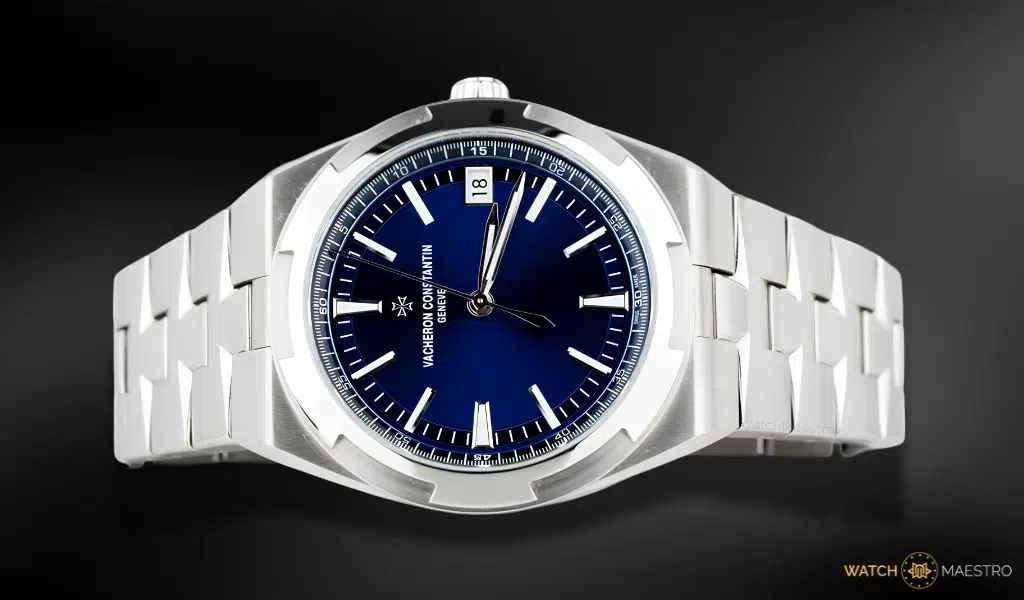
Introduced in 1996 as the descendant of the 1977 reference 222, the Overseas features a Maltese-cross bezel and quick-change bracelet straps. In the WatchMaestro data, seven Overseas sales averaged $41,730 (AED 153,300). A steel blue-dial Overseas changed hands for $25,459 (AED 93,500). That means a buyer can acquire an Overseas, complete with hand-finishing and a certified Geneva Seal movement, for roughly 18% of the price of a steel Nautilus 5711/1A.
Elite Dress Watches at Better Prices
New buyers often pay heavy premiums for steel sports watches while ignoring precious-metal dress watches. The WatchMaestro data highlights this buying opportunity:
- Five white and rose-gold Patek Philippe Calatravas averaged $32,016 (AED 117,600). That sits below the lowest-priced Audemars Piguet sports watch in the entire dataset.
- A vintage yellow-gold Patek Philippe Gondolo traded at the bottom of the Patek price spectrum for $13,587 (AED 49,900).
- A white-gold Vacheron Constantin Historiques American 1921 driver’s watch cleared at $27,229 (AED 100,000), while its solid yellow-gold reissue cousin, the Historiques 222, fetched $63,989 (AED 235,000).
Precious-metal dress models let collectors secure Holy Trinity hand-finishing and mechanical heritage without paying high sports watch premiums.
Also Read: Ceramic Watches: Types, True Costs, and What to Know Before You Buy
Moving Past the Holy Trinity: German and Independent Watchmakers
Modern collectors actively debate whether the Holy Trinity still defines the top of horology. Real transaction patterns show high-end capital frequently moves into two alternate categories:
The German Challenger: A. Lange & Sohne
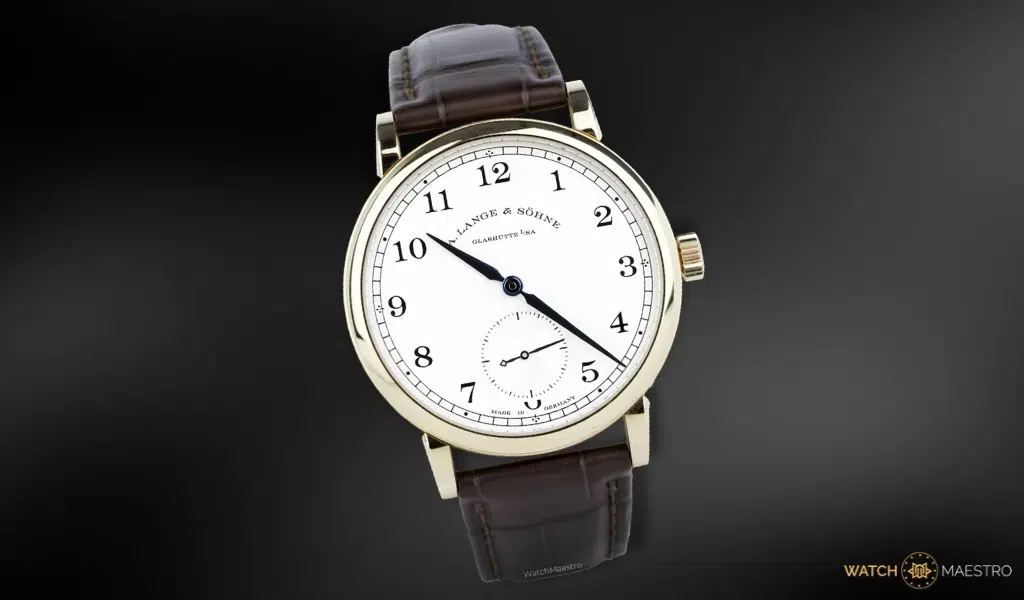
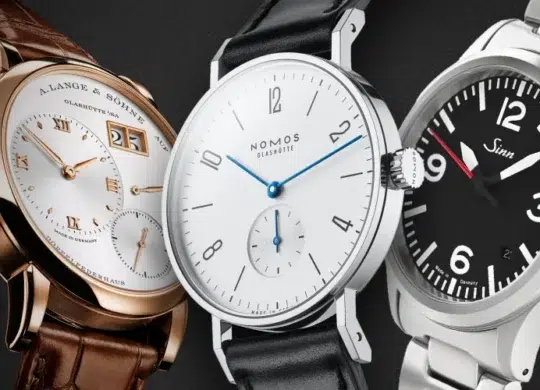
If the Holy Trinity added a fourth member, A. Lange & Sohne would fill it. Walter Lange revived the historic brand in Glashutte, Germany, in 1990. Lange movements feature untreated German silver three-quarter plates, screwed gold chatons, and freehand-engraved balance cocks. The factory assembles every movement twice to ensure flawless execution.
Why is not Lange an official member? The company is German rather than Swiss, and its workshops sat shuttered for over 40 years during Soviet control of East Germany, breaking its continuity. Even so, collectors treat it as an equal.
In our dataset, one repeat collector who purchased 17 watches worth $415,955 (AED 1,527,600) paired classic Patek Calatravas directly with an 18k rose-gold Lange dress watch acquired for $19,061 (AED 70,000).
The Independent Apex: F.P. Journe and Richard Mille
At the highest tier of private wealth, buyers often move past traditional catalog models toward independent brands:
- F.P. Journe: Builds movement plates and bridges out of solid 18k rose gold. In the transaction data, five Journe watches averaged $351,235 (AED 1,289,910), led by a platinum Vertical Tourbillon Souverain that fetched $1,198,067 (AED 4,399,90, the highest price in the dataset.
- Richard Mille: Uses carbon TPT cases and lightweight titanium tourbillon plates. Four Richard Mille sales averaged $288,553 (AED 1,059,710), trading strictly between $229,843 (AED 844,100) and $449,694 (AED 1,651,500).
The Big Three remain the bedrock of classic watch collecting, but independent watchmakers now have the highest price ceiling at the top of the market.
Also Read: Why are Richard Mille Watches So Expensive
Choosing the Right Watchmaker
| Collecting Objective | Recommended | Target References | Market Advantage |
|---|---|---|---|
| Discreet Horology & Value | Vacheron Constantin | Overseas 4500V, Historiques 1921, Patrimony | Lower secondary entry point, Geneva Seal finishing, high heritage value |
| Modern Architecture & Case Design | Audemars Piguet | Royal Oak 15510, Offshore Diver, Double Balance Wheel | Iconic silhouette, advanced material engineering (ceramic, forged carbon) |
| Generational Value & Complication Benchmark | Patek Philippe | Calatrava 5226G, Annual Calendar 5726, Perpetual Chrono 5270 | Deep auction liquidity, sustained global demand, broad model catalog |
FAQs About the Holy Trinity of Watches
Who coined the term Holy Trinity of Watches?
Watchmakers, auctioneers, and collectors popularized the phrase during the mid-1970s. They used it to recognize the three Swiss houses that preserved hand-finished mechanical watchmaking while quartz movements disrupted the broader Swiss watch industry.
Is Vacheron Constantin considered inferior to Patek Philippe and Audemars Piguet?
No. Vacheron Constantin holds the oldest continuous operating history of the group (founded in 1755) and builds calibers backed by the Geneva Seal. It trades at lower secondary market prices simply because it spends less on mass consumer marketing and produces lower annual volumes. Savvy buyers view this lower premium as a pricing advantage.
What is the most accessible entry point into the Holy Trinity?
Precious-metal dress watches from the 1990s and 2000s provide the lowest entry prices. Manual-wind Patek Philippe Calatravas (such as references 3919 or 5119) and Vacheron Constantin Patrimony references regularly clear between $12,000 and $18,000 (AED 44,000 to AED 66,000) on the secondary market.
Which Holy Trinity brand retains its value best?
Patek Philippe retains value best across both sports lines and classic complications. Audemars Piguet follows closely, supported by intense global demand for steel and ceramic Royal Oak models. Vacheron Constantin watches experience standard retail depreciation across several catalog lines, though Overseas sports models and limited Historiques references preserve their value well.