
Strap vs. Band vs. Bracelet: What is the Difference?
- Strap: A flexible band made of leather, rubber, nylon, or fabric.
- Bracelet: A band made of metal links, like stainless steel or titanium.
- Band: The catch-all word for both.
So, a Rolex Oyster is a bracelet. NATO is a strap. Both are bands.
Comparison of Watch Strap Types
| Strap type | Best for | Water friendly? | Comfort |
| Leather | Office, formal, daily wear | No | High after break-in |
| Metal bracelet | Everyday, travel, dive watches | Yes | Medium to high |
| Rubber | Sports, swimming, hot weather | Yes | High |
| Silicone | Fitness, sensitive skin | Yes | Very high |
| NATO / Zulu nylon | Outdoors, military style, casual | Yes | High |
| Perlon | Warm climates, micro-adjustment | Yes | Very high |
| Canvas / sailcloth | Casual and smart casual | Mostly | High |
| Milanese mesh | Dress and everyday | Yes | High |
| Exotic leather | Formal, luxury watches | No | High |
Leather Watch Straps
Leather is a strap most people imagine first. It is soft, warm on the wrist, and it develops a personal patina over the years. Common leather styles are:
- Calfskin: The everyday standard, smooth, affordable, easy to match.
- Shell Cordovan: Dense horse leather that shines instead of creasing.
- Suede: Soft and matte, great with tweed and casual jackets.
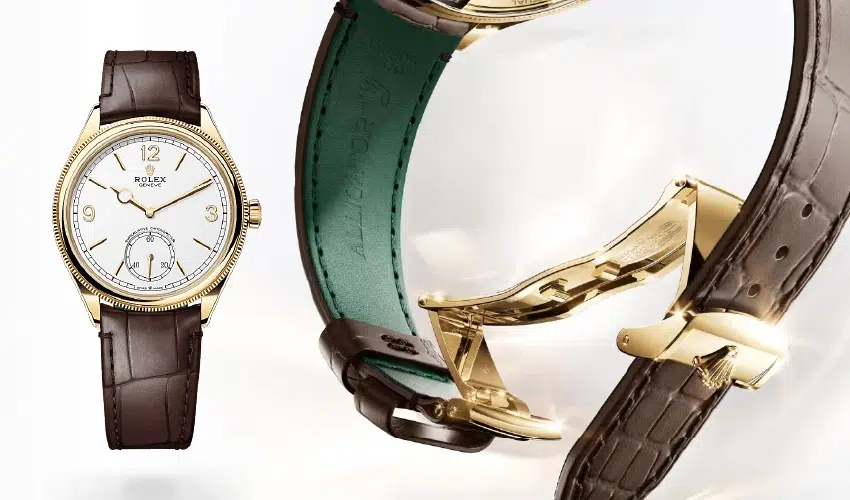
- Alligator and Crocodile: The dress-watch classic, with a rich scale pattern.
- Ostrich, Lizards, and Shark: Unusual textures for people who want something different.
- Bund Strap: A leather pad that sits under the watch. Born in aviation, now a vintage style statement.
- Rally and Racing Straps: Perforated holes, built for airflow and motorsport looks.
Leather straps look refined, feel comfortable, have a huge color range, and work from suit to jeans. However, these straps hate water and sweat, need occasional care, and usually last 1 to 3 years with daily wear.
In addition, these are best for dress watches, office wear, weddings, and anyone who wants a warm, classic look. Always match your strap color to your belt and shoes. Brown with brown, black with black. It is the easiest win there is.
Metal Watch Bracelets
A metal bracelet feels solid and looks sharp. It also handles water, sweat, and heat without complaining. Some of the most popular styles are:
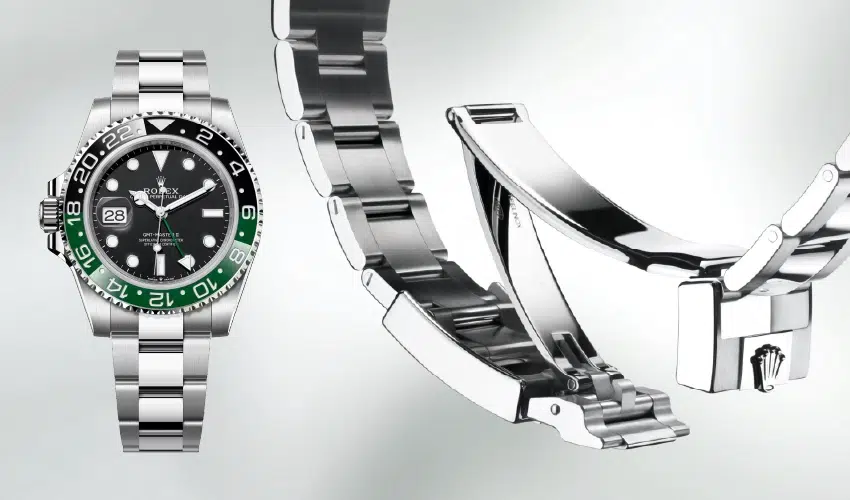
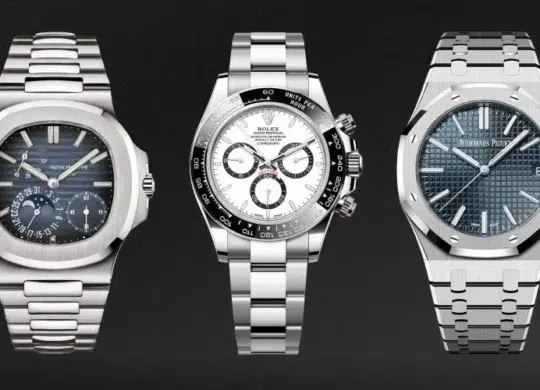
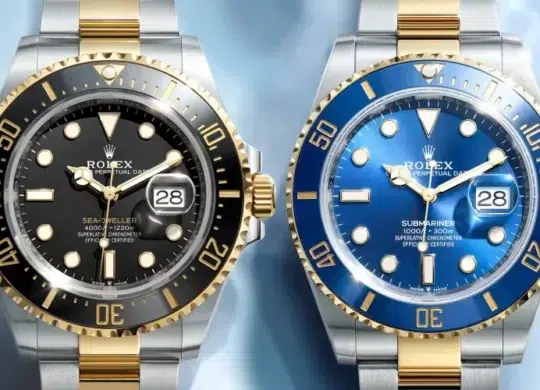
- Oyster (Three-Link): Flat, wide center links. Sporty and tough.
- Jubilee (Five-Link): These are smaller polished center links, dressier and very flexible.
- President (Three-Link Rounded): Semi-circular links with a luxury feel.
- Beads of Rice: Many small oval links. Vintage charm, super comfortable.
- Milanese Mesh: Finely woven steel that slides smoothly on the wrist.
- Shark Mesh: Heavy-duty woven steel made for dive watches.
- Engineer Bracelet: Thick, rounded links with a rugged industrial look.
- Integrated bracelet: Flows straight out of the case with no visible lugs.
Stainless steel is the default, titanium is light and hypoallergenic, gold, two-tone, and ceramic accents. These straps are long-lasting, water-safe, with no odor and are easier to clean. But metal straps are heavier, can scratch, and sizing usually means removing links.
Iain Cahill, a watch enthusiast and sales manager at WatchMaestro says, metal watch bracelets are best for everyday wear, travel, dive watches, and for anyone who wants one band for everything.
Rubber Straps
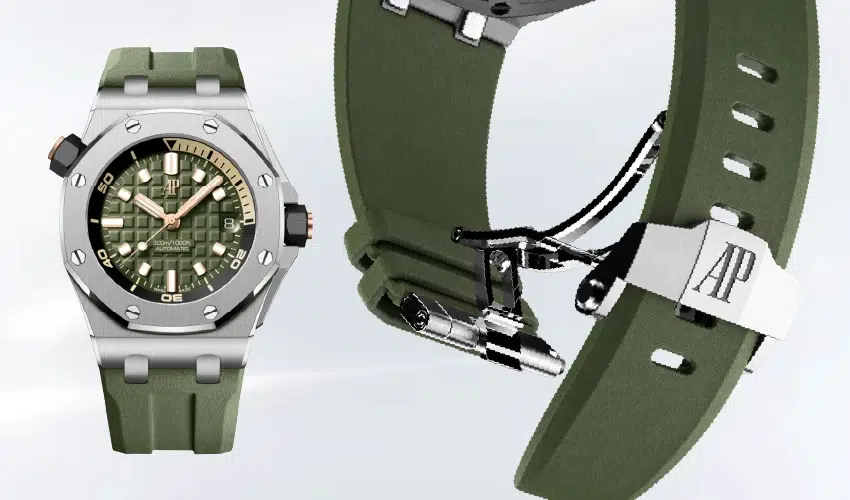
Rubber is the workhorse of sports watches. Vulcanized rubber and FKM rubber resist salt water, chlorine, sunscreen, and sweat. These are waterproof, grippy, light, and rinse clean in seconds. Rubber straps for watches, nonetheless, are too casual for formal events.
Likewise, cheap rubber can pull arm hair or feel sticky in heat. Still, they are reliable for swimming, diving, running, beach days, and humid climates like Dubai. The most popular looks are tropic style with a woven pattern, waffle style with square texture, and smooth diver style with a ridged surface.
Silicone Straps
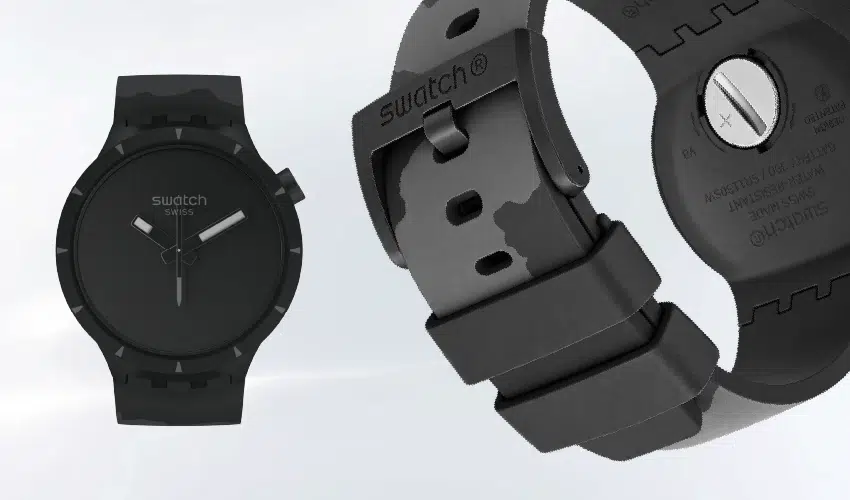
Silicone is rubber’s softer cousin. It is flexible, hypoallergenic, and usually the cheapest strap you can buy. These are very soft, kind to sensitive skin, have endless colors, and great for kids as well as fitness trackers.
However, Cahill says silicone watch straps can attract dust and lint, and they can look less premium than real rubber. But then again, they are good for workouts, smartwatches, and anyone with a metal allergy.
NATO Watch Straps
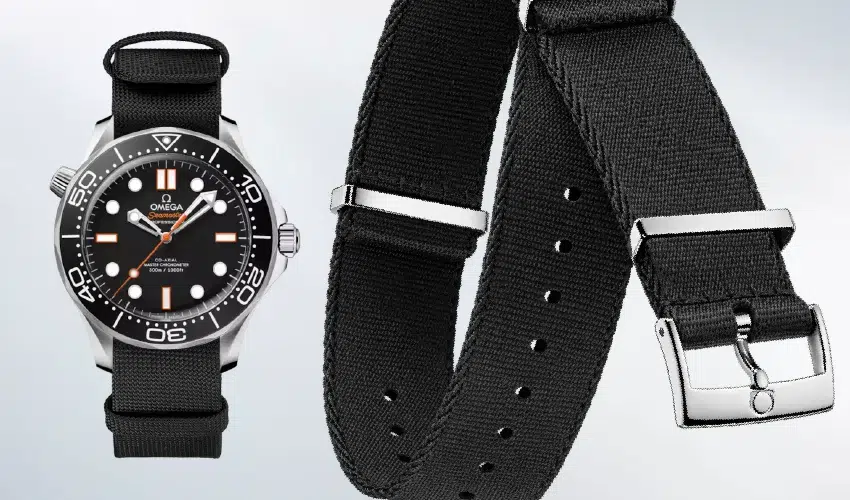
A NATO strap is one long piece of nylon that passes under the watch head. If one spring bar fails, the watch still stays on your wrist. That safety feature is why the British military adopted it in the 1970s. Advantages include:
- Cheap
- Washable
- Tough
- Quick to swap without tools
- Available in hundreds of colors
These are great for field watches, dive watches, summer, and casual weekends. One drawback of the NATO bracelet is that the extra nylon layer lifts the watch a little higher off the wrist.
Zulu Straps
A Zulu is a thicker NATO cousin with heavy rounded hardware. It looks more rugged and holds bigger, heavier watches well. Most Zulus skip the extra keeper flap. Lack of an extra under-flap allows the watch to sit flatter against your wrist. The long strap length allows you to easily buckle it over thick jackets or diving suits.
Perlon Straps
Perlon straps are watchbands woven from nylon loops, famously developed in 1950s Germany. Unlike standard straps with pre-punched sizing holes, the buckle prong passes directly through any opening in the braided mesh. Thus, this unique construction provides a highly breathable, lightweight, and micro-adjustable fit that excels in hot weather.
Fabric and Canvas Straps
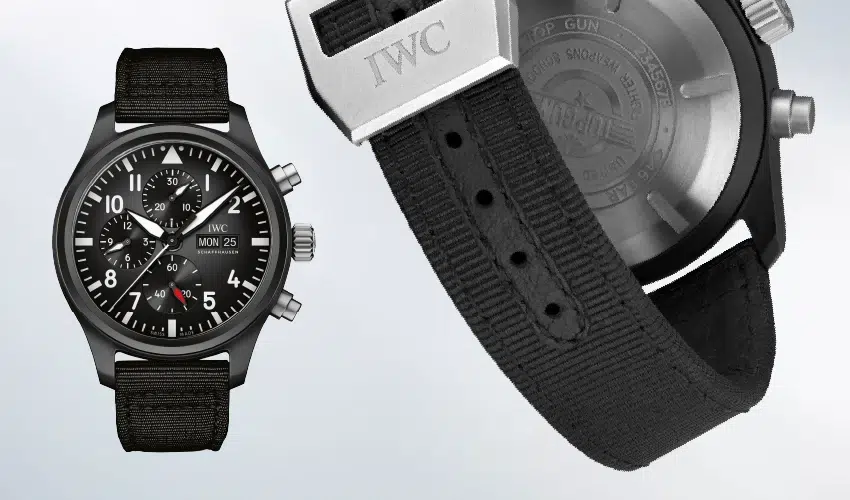
Canvas, cordura, sailcloth, and denim straps sit perfectly between rubber and leather, adding rich texture to a watch without shouting for attention. These highly breathable, casual bands are often lined with leather for enhanced comfort, which make them an excellent match for field watches, pilot watches, and smart casual outfits. However, they can fray over time, and because of their leather lining, these versions are not truly waterproof.
Specialty and Modern Materials
- Ceramic: Scratch resistant, smooth, and light for its look. Costly, and it can crack if dropped.
- Resin and Plastic: Common on digital watches. Cheap, light and very durable.
- Vegan and Alternative Leather: Cork, apple leather, Pinatex, and recycled PU. These are great for anyone avoiding animal products.
- Titanium and Carbon Fiber: Ultra light and tough for the tech-forward crowd.
One-piece vs. Two-Piece Straps
- One-piece straps, such as NATO, Perlon, and Single-Pass slide under the case in one continuous loop. They add security and sit slightly higher.
- Two-piece straps attach on both sides of the watch and meet at a buckle. This is the standard setup.
- Single-pass straps are a hybrid: NATO security, no extra layer under the watch.
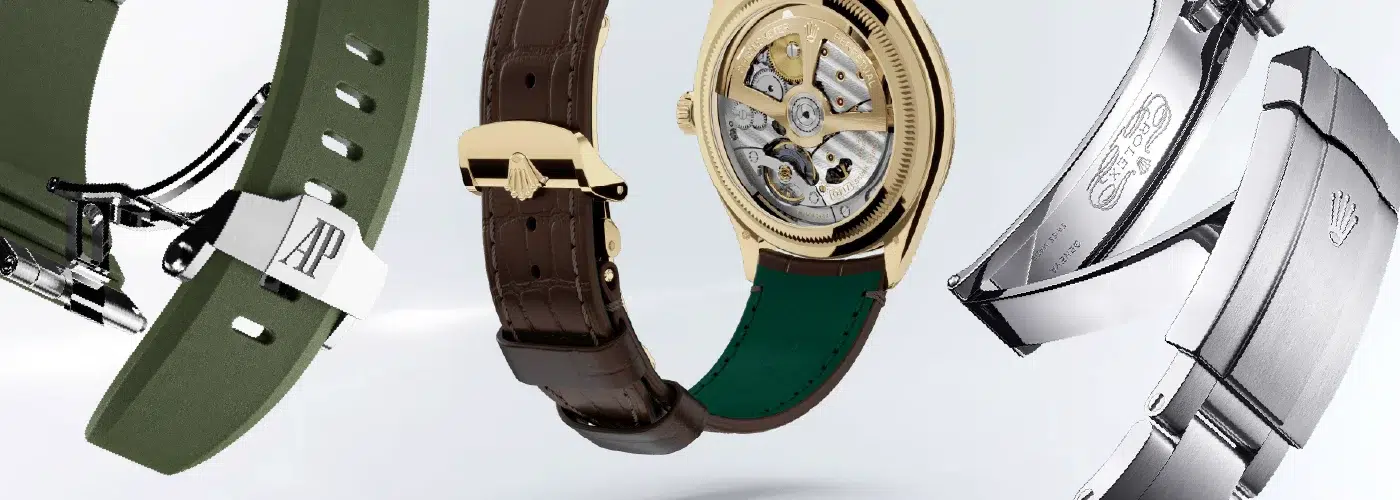
Clasps and Buckles
The closure changes comfort as much as the material does.
- Tang Buckle (Pin Buckle): The simple pin-and-hole design on most leather straps.
- Deployant Clasp: Folds out so the strap stays a closed loop. Saves leather from creasing.
- Butterfly Clasp: Opens from both sides for a clean, hidden look.
- Fold-Over Clasp with Safety: Standard on steel bracelets and dive watches.
- Hook or Slide Clasp: Common on mesh bracelets for step-free sizing.
- Micro-Adjust Systems: Let you fine-tune the fit as your wrist swells in heat.
How to Choose the Right Watch Strap
Measure Your Lug Width: Measure the gap between the lugs in millimeters. Common sizes are 18mm, 20mm, and 22mm. Buy the exact number. A 20mm strap will not fit a 22mm gap. Match the Strap to the Watch: This creates visual harmony, ensures the watch fits the occasion, and protects the hardware from clashing. A thoughtful combination elevates the look from random to intentional
| Dress Watch | Thin Leather or Milanese mesh |
| Dive Watch | Rubber, steel bracelet, or NATO |
| Field Watch | Canvas, NATO, or Perlon |
| Chronograph | Rally leather or steel bracelet |
| Pilot Watch | Thick leather or Bund |
| Smartwatch | Silicone, nylon, or a light metal loop |
- Match the Strap to Your Day: If you sweat, swim, or work outside, skip leather. If you sit in meetings, leather or steel will serve you better than neon rubber.
- Match the Hardware: Silver buckle with a steel case. Gold buckle with a gold case. Small details make a big difference.
- Think About Taper and Thickness: A strap that tapers from 20mm to 18mm looks more elegant. A straight-cut strap looks sportier. Thin straps suit small watches; thick straps balance big ones.
How to Change a Watch Strap at Home
- Buy a spring bar tool. It costs a few dollars and saves a lot of scratches.
- Lay the watch face down on a soft cloth.
- Slide the forked end of the tool between the strap and the lug, and press the spring bar in.
- Lift the strap out gently and insert one end of the new spring bar.
- Then, compress the other and click it into place.
- Tug the strap to confirm it is locked.
Watches with quick-release spring bars are even easier. Just pull the small lever on the underside and swap.
How to Care for Each Strap Type
- Leather: Keep it dry, wipe it after wearing, and condition it a few times a year. Let it air out between wears.
- Metal: Rinse with warm water, use mild soap and a soft brush, then dry fully.
- Rubber and Silicone: Wash with soap and water. Dust wipes off with a lint roller.
- Nylon and Fabric: Hand wash in cold water, air dry, and never use a hot dryer.
- All Straps: Rotate between 2 or 3 so each one rests and lasts longer.
Common Mistakes to Avoid
Your watch strap can last long if you avoid these mistakes:
- Wearing leather in the pool or the shower.
- Buying the wrong lug width because you guessed.
- Wearing the strap too loose so the watch spins on your wrist.
- Using a chunky strap on a slim dress watch.
- Skipping the spring bar tool and scratching the lugs with a screwdriver.
Final Thoughts on Types of Watch Straps
There is no single best strap. There is only the best strap for your watch, your day, and your style. Start with two: one dressy leather or steel band and one sporty rubber or nylon band. Those two will cover almost every situation you meet. Then keep experimenting. Changing a strap is the cheapest, fastest way to make a watch you already own feel brand new.
Frequently Asked Questions (FAQs)
What are the most common types of watch straps?
Leather, stainless steel bracelets, rubber, silicone, and nylon NATO straps cover the vast majority of watches sold today.
Which watch strap is the most comfortable?
Most people find Perlon, silicone, and well-broken-in leather the most comfortable. Comfort depends on wrist size, climate, and watch weight.
Which watch strap type lasts the longest?
A stainless steel or titanium bracelet can last decades. Rubber usually lasts several years, leather 1 to 3 years with daily wear, and nylon somewhere in between.
Can I wear a leather strap in water?
No. Water and sweat break down leather fibers and cause cracking and odor. Use rubber, nylon, or metal when you expect to get wet.
How do I know my watch strap size?
Measure the distance between the inside edges of the lugs in millimeters. That number is your strap width. Strap length is separate and usually listed as short, regular, or long.